The Longden · Drummond Story
A family history across seven generations — 1797 to the present day
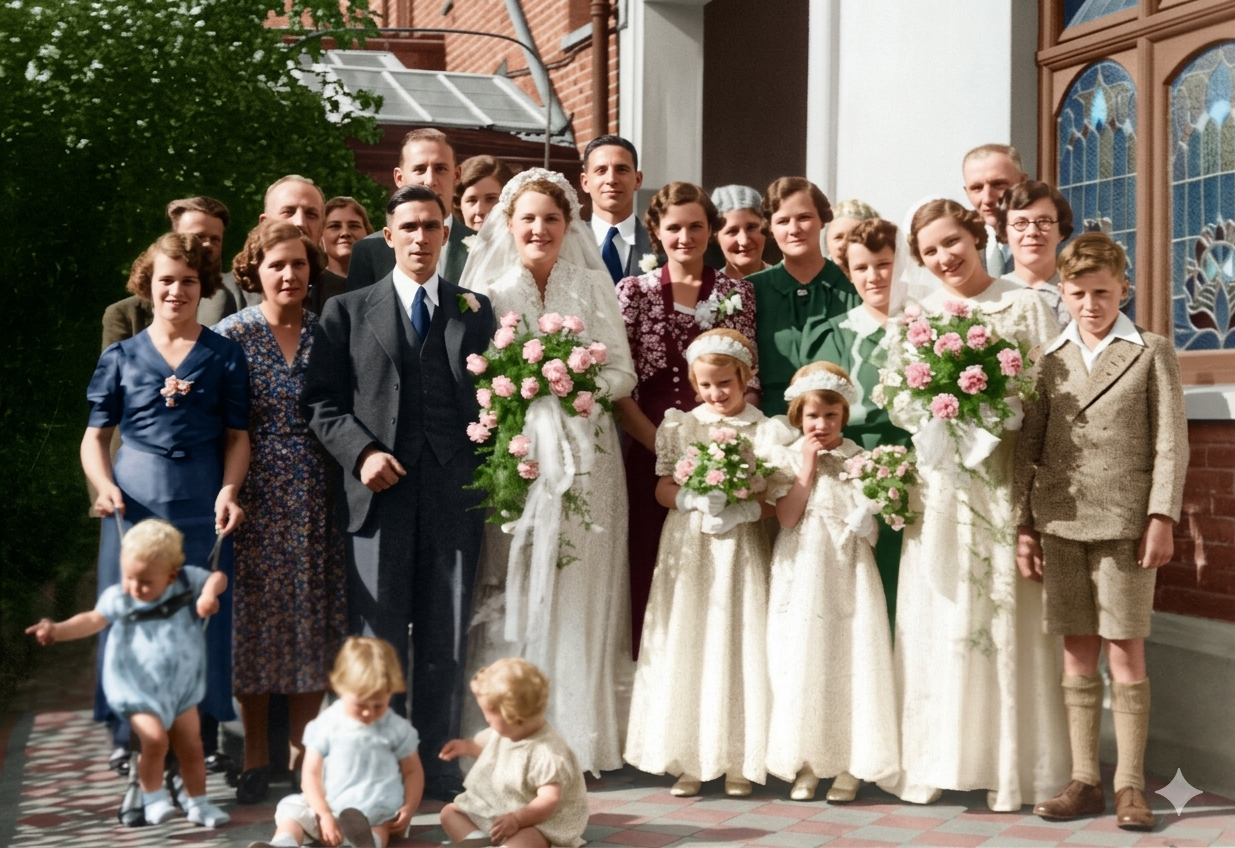
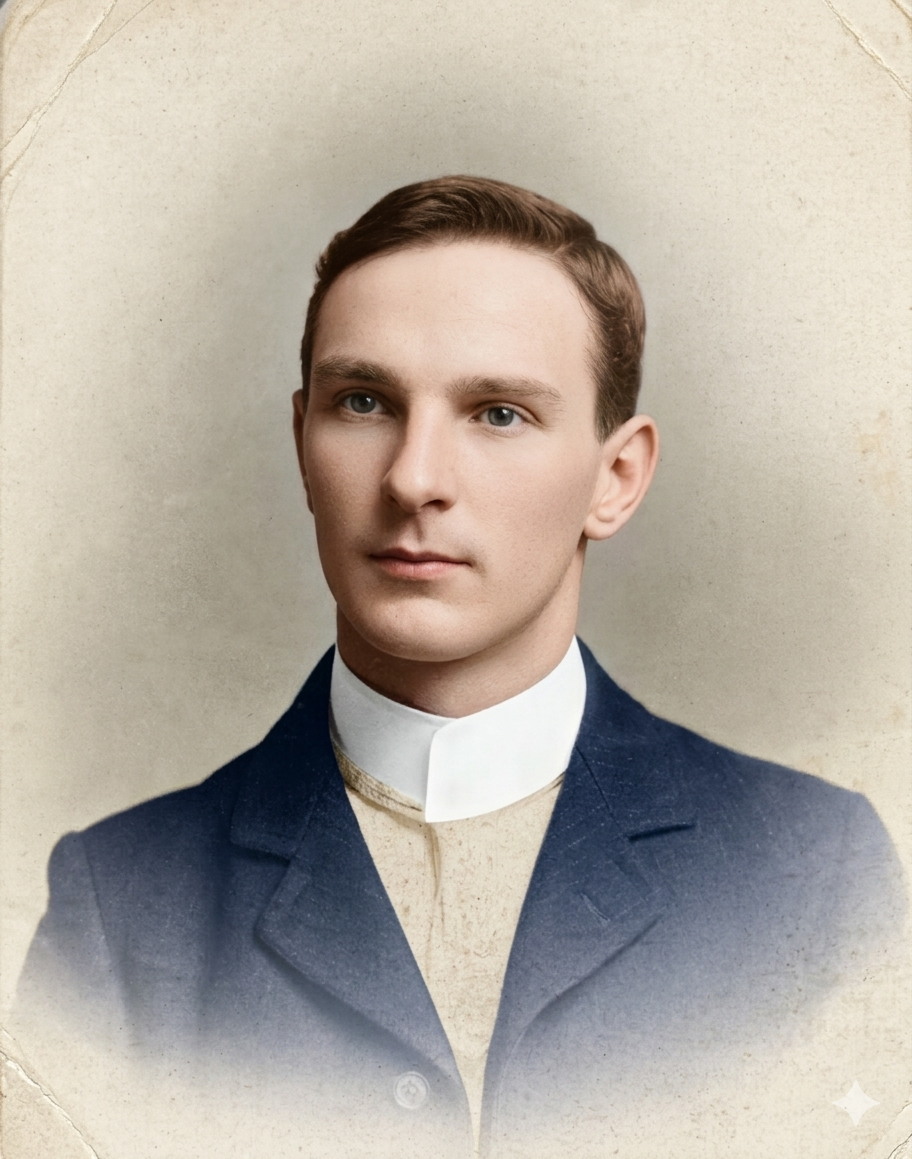
Frederick and Winifred Drummond on their wedding day, 1930s.
Every family's story begins somewhere. This is the story of the Longden and Drummond families — starting with the generations who came before and going back as far as the records can take us. Not the present, but the past that shaped it. The people who lived through extraordinary moments in history, who worked impossible hours in vanished industries, who crossed oceans and lost children and built lives from nothing — and who, without knowing it, made you.
This family's story begins with two threads — a Cork-born Irishman who crossed the Irish Sea to London in 1821, and a Birmingham soldier's son born at a British Army fort on the Khyber Pass in 1921.
Frederick & Winifred Drummond
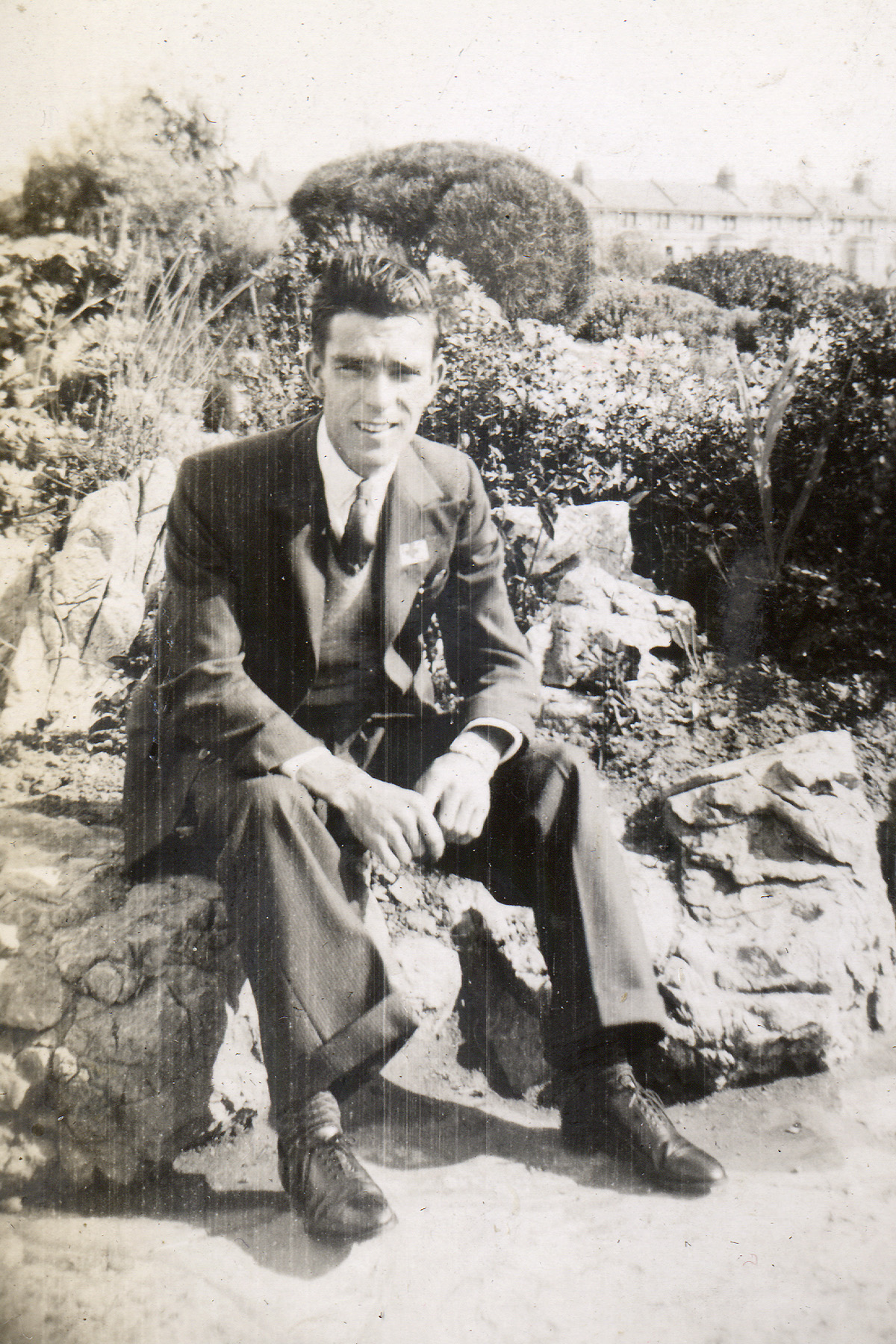
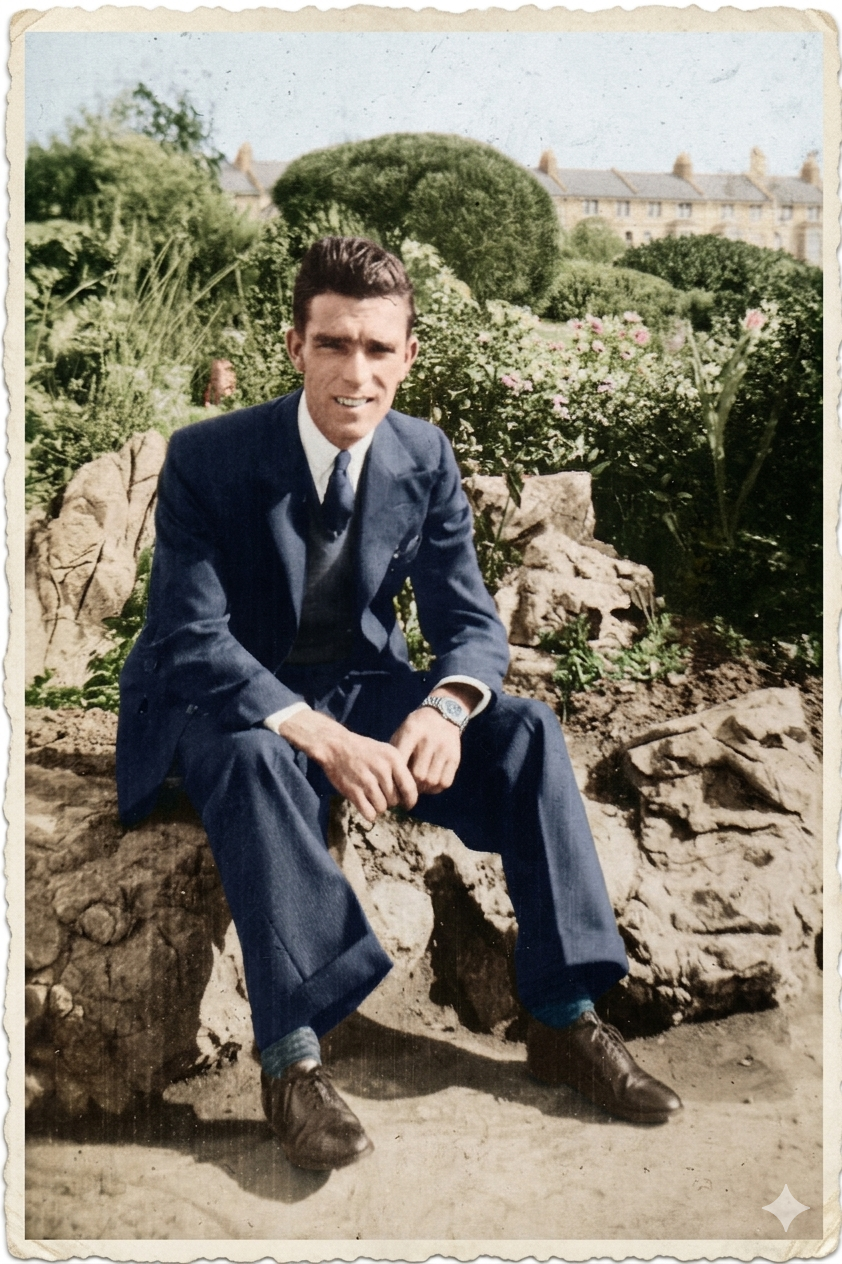
Click to reveal in colour
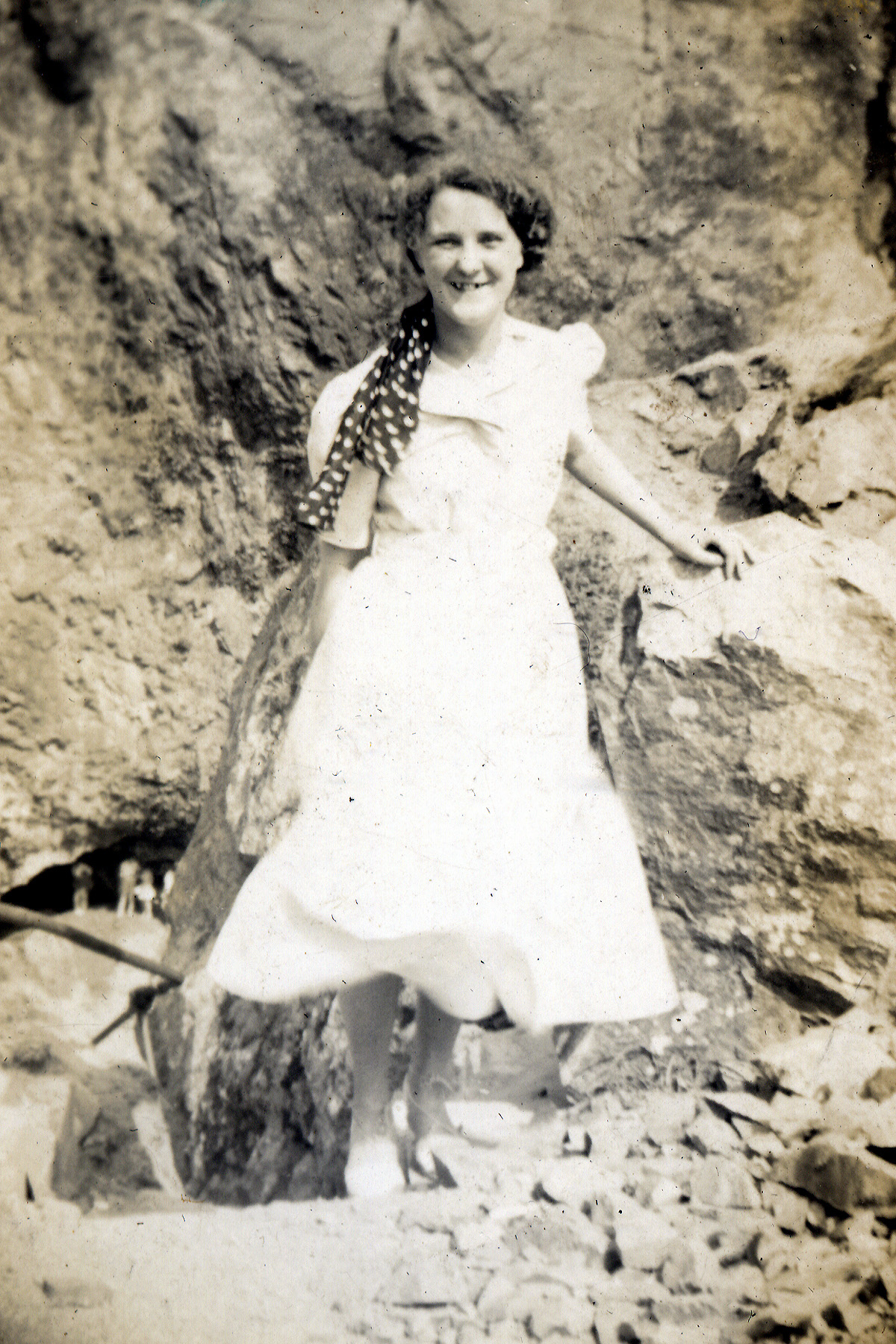

Click to reveal in colour
Frederick Drummond appears in the original tree as a single line: born Holborn 1910, died 1985. The records tell a much fuller story.
The death of Emily (1912)
Frederick was the fifth and youngest child of William Turnour D Drummond and Emily Eliza Murray. He was born on 28 September 1910 at the family home in Finsbury, Holborn. He was barely two years old when his mother Emily died in the last quarter of 1912, aged 35. Family memory records that she died of a heart condition — a 35-year-old woman in a cramped Clerkenwell tenement, with five children under 14, and no treatment available beyond rest and prayer. Frederick would have had no memory of her at all.
His father William was left with five children: William (14), Emily (12), James (10), Thomas (4), and Frederick (2). By 1921 William was listed in the census as unemployed — a coppersmith labourer with no work, a widower of nine years, struggling in his mid-forties in post-war London.
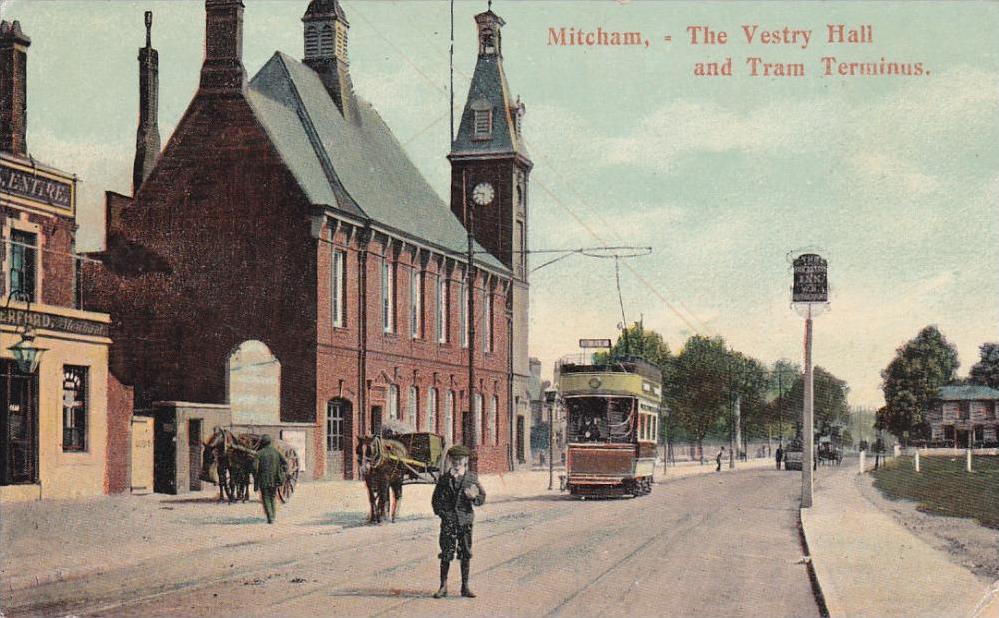
Holborn Union Schools, Mitcham (1921)
The 1921 census finds Frederick not with his father but thirty miles away in Surrey, at Holborn Union Schools, London Road, Mitcham — a large residential Poor Law institution for children whose families could not support them. He is listed with the standard institutional designation: inmate. He was 11 years old. The superintendent was a Mr Dury.
The Holborn Union Schools were not a workhouse in the Victorian sense — by the 1920s conditions had improved considerably — but it was still a regimented, institutional childhood. Hundreds of children lived there together, fed, clothed and educated by the Poor Law authority, separated from whatever family they had. For Frederick, that separation had begun when he was two.
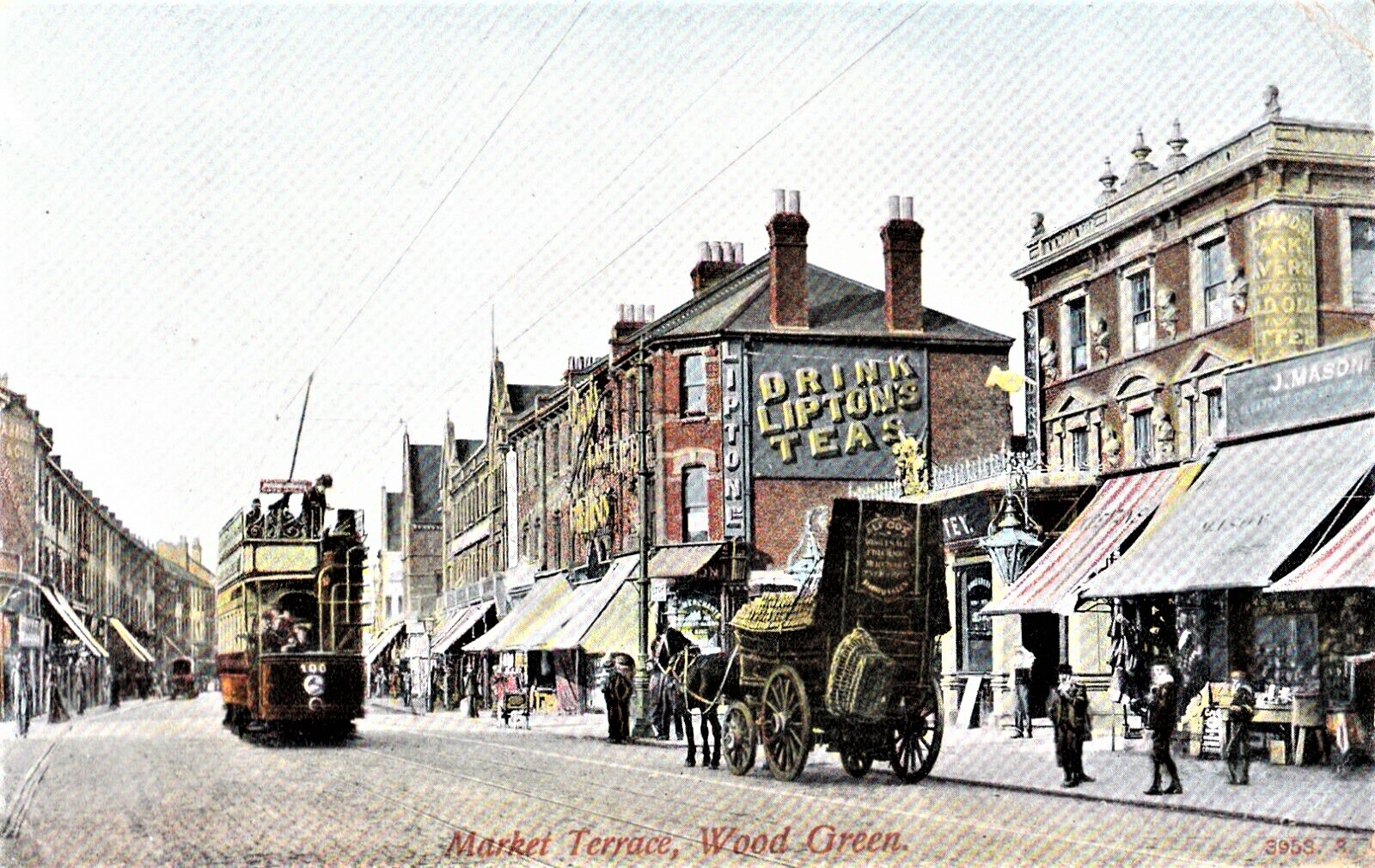
Wood Green — a life rebuilt (1939)
By 1939 Frederick was 28 years old and living at 43 Finsbury Road, Wood Green with his wife Winifred Sybil Barwick. His occupation in the 1939 Register: Boot Repairer. Family memory places him as a cobbler working at Harrods in Knightsbridge. The boot repairer's bench at Harrods, serving the well-heeled customers of South Kensington: a long way from the Holborn Union Schools.
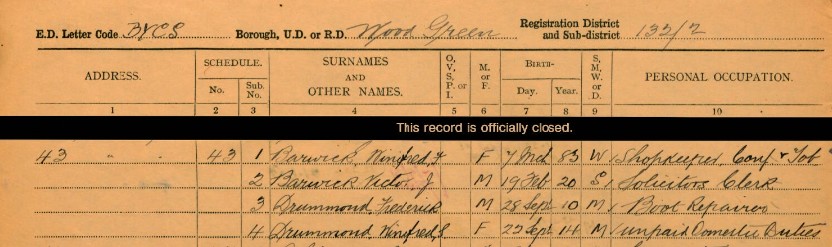
The household at Finsbury Road also contained Winifred's widowed mother Winifred Fanny Barwick (running a confectionery and tobacconist's business) and her brother Victor John Barwick (a solicitor's clerk). Two families under one roof, on the eve of the Second World War.
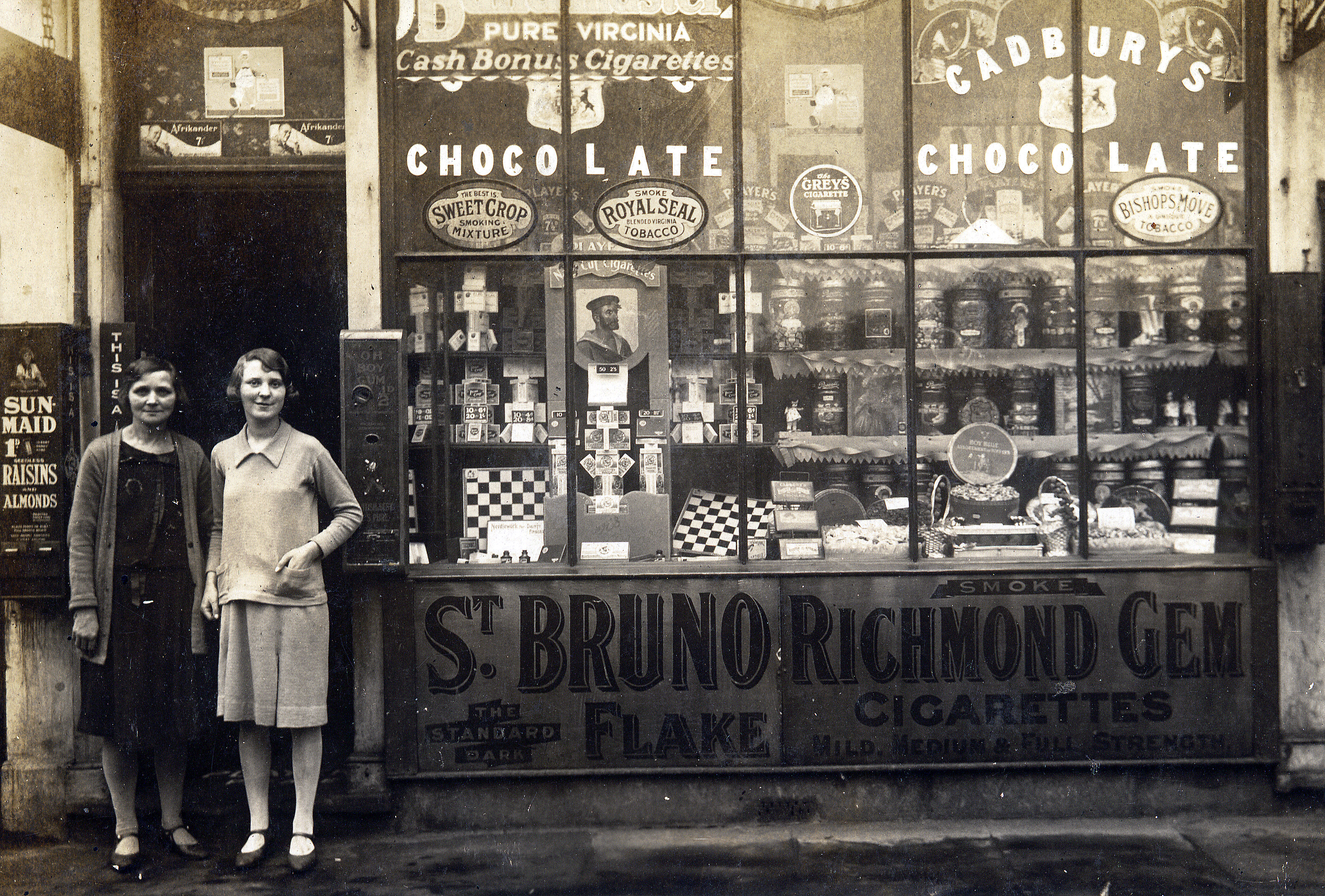
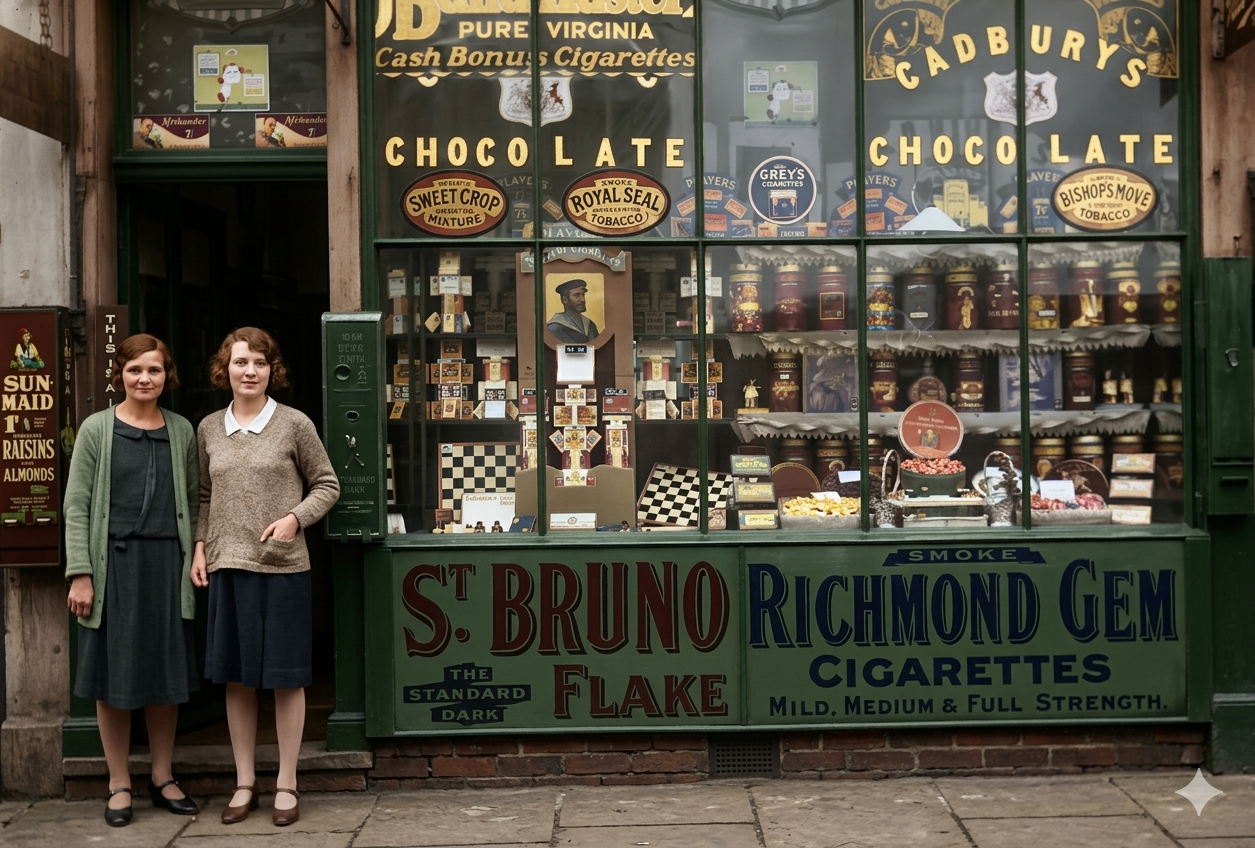
Click to reveal in colour
A note on the Ancestry record
The existing tree records Frederick's death as occurring in Ipswich in 1985. The GRO death index and family recollection both place his death in Enfield, Middlesex — not Ipswich. The Ipswich entry appears to be an incorrectly accepted record hint in the original Ancestry tree.
The arc
From Napoleon Drummond building theatrical machinery at the Globe Theatre in 1871, to his great-grandson Frederick repairing shoes in Wood Green in 1939 — three generations separate them, but the thread runs straight. A boy who lost everything before he could remember losing it, who grew up inside an institution, who came out the other side and built a quiet, ordinary life. He died in Enfield in 1985, aged 74.
The Barwick Line
The Barwick and Harvey families came from the Kent Downs — small villages, blacksmiths, coastal towns — before making their way up to north London in the early 1900s.
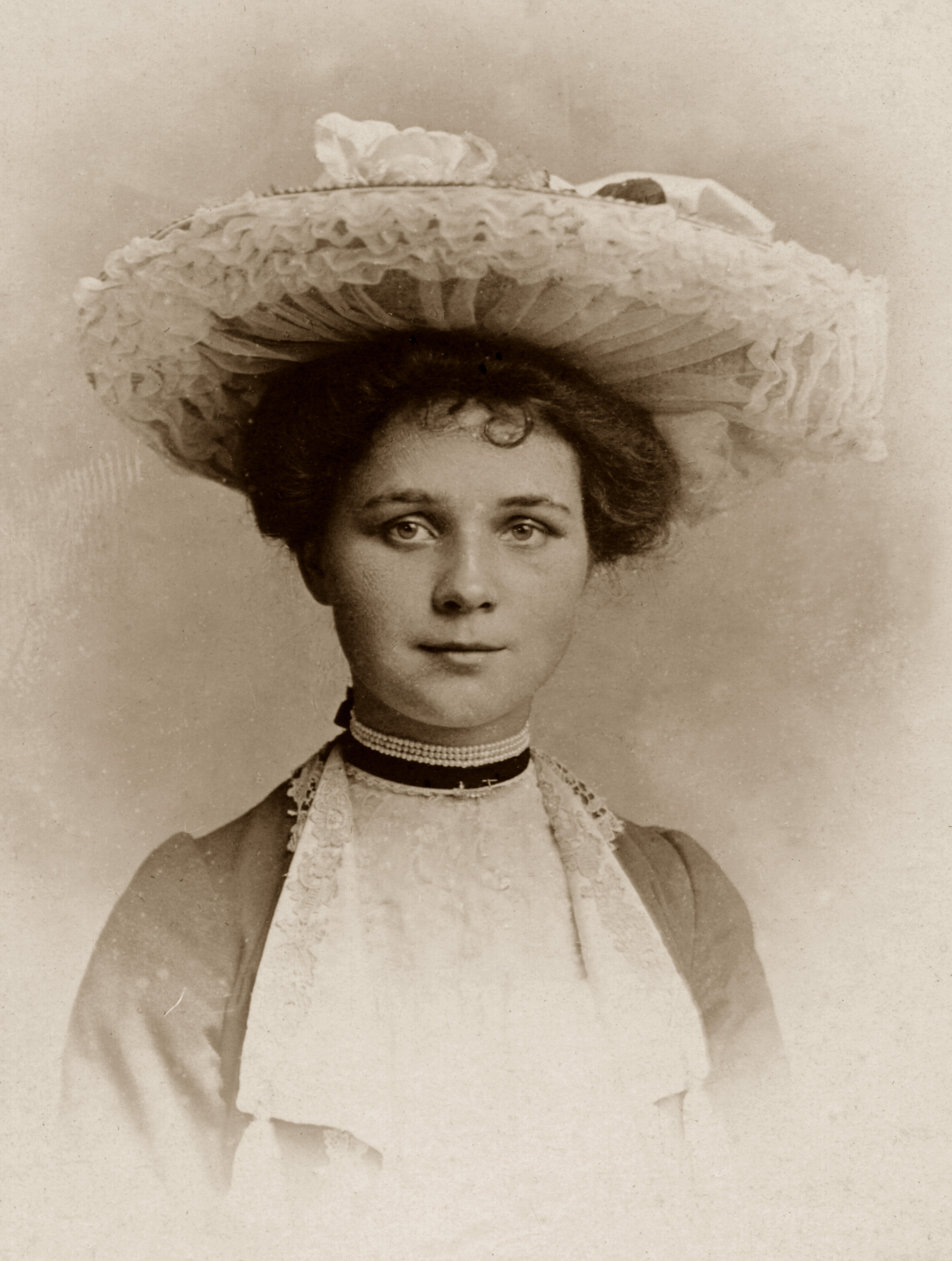
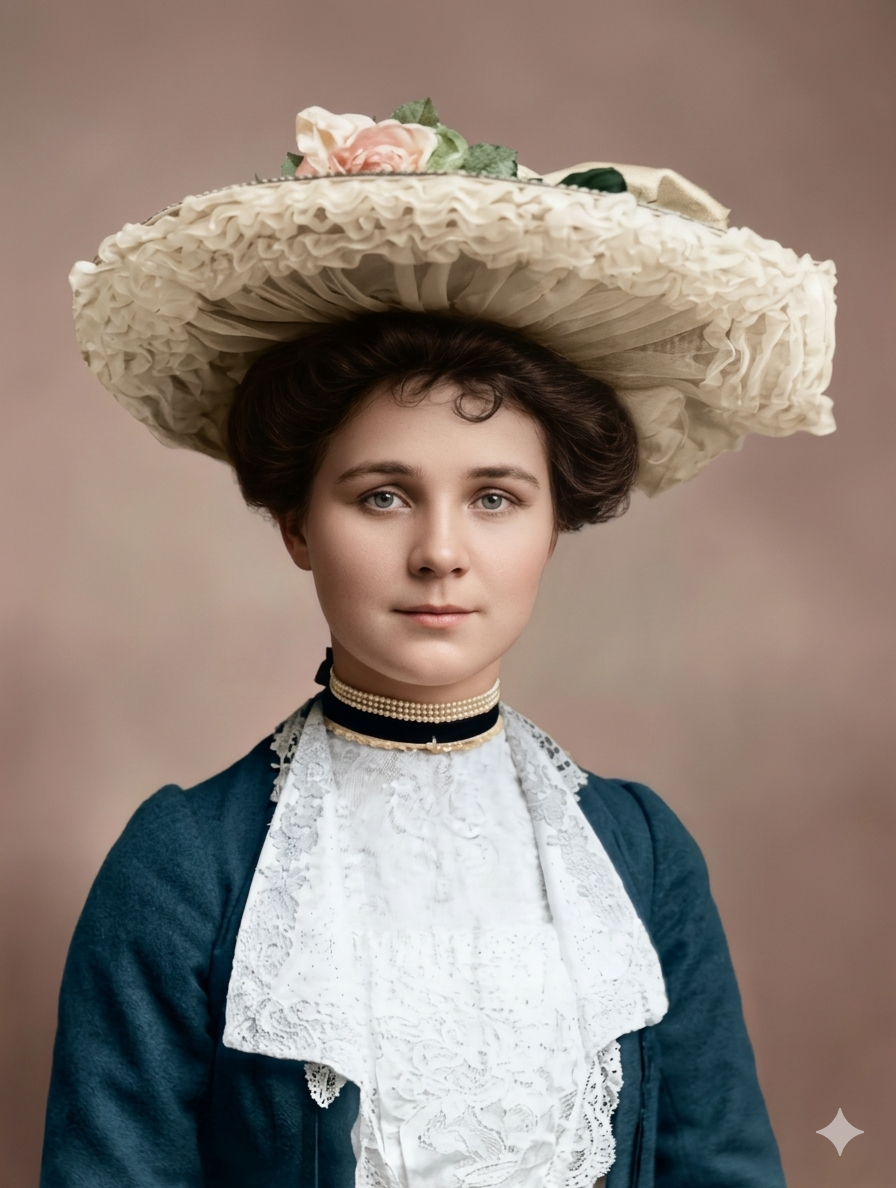
Click to reveal in colour
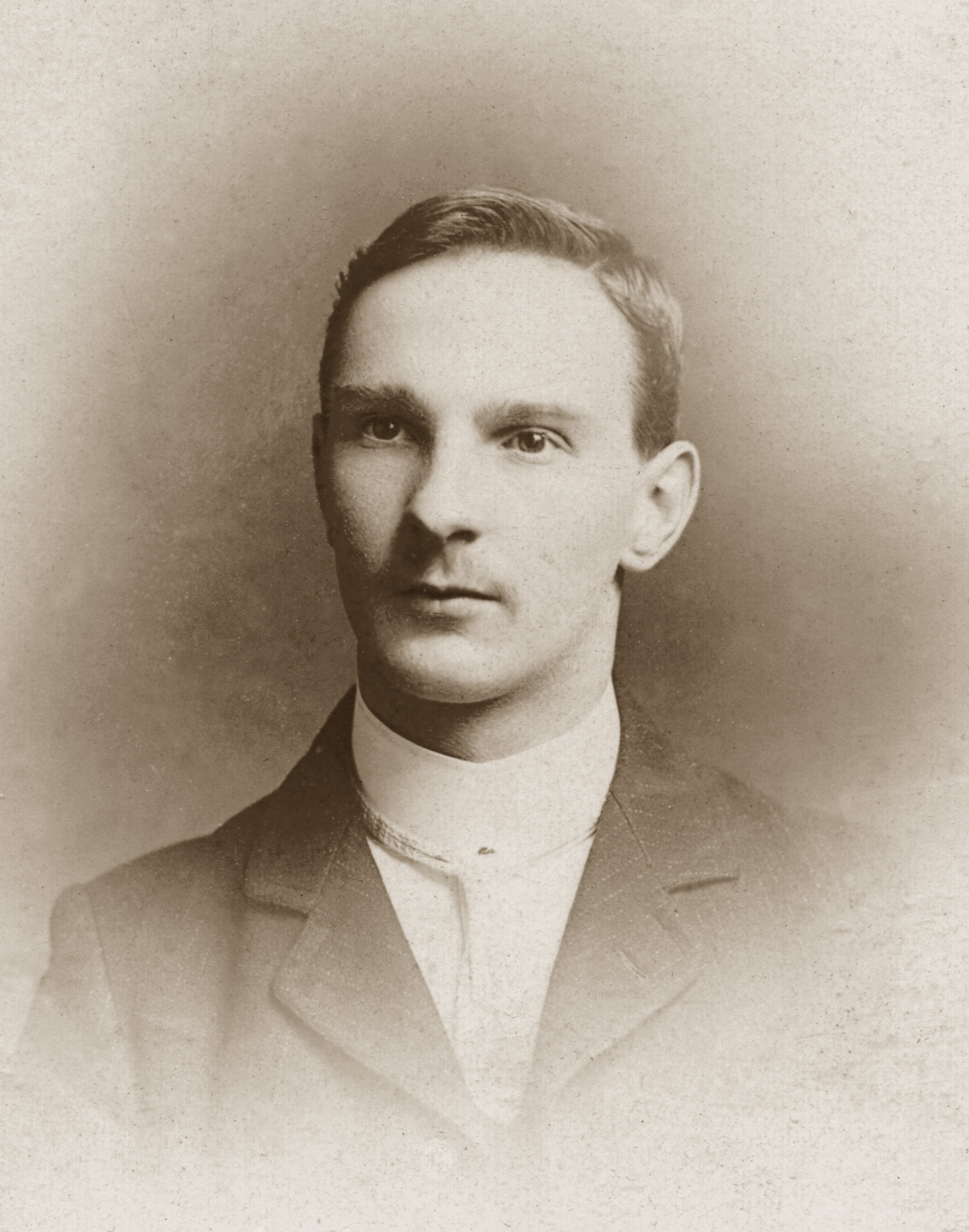
Click to reveal in colour
William Leonard Barwick — the Co-op man who didn't make it
William Leonard Barwick was a Kentish man who came up to north London, worked his way from warehouseman to manager, survived the First World War, and then died at 36 — leaving three young children and a widow who would spend the next 37 years keeping the household together alone.
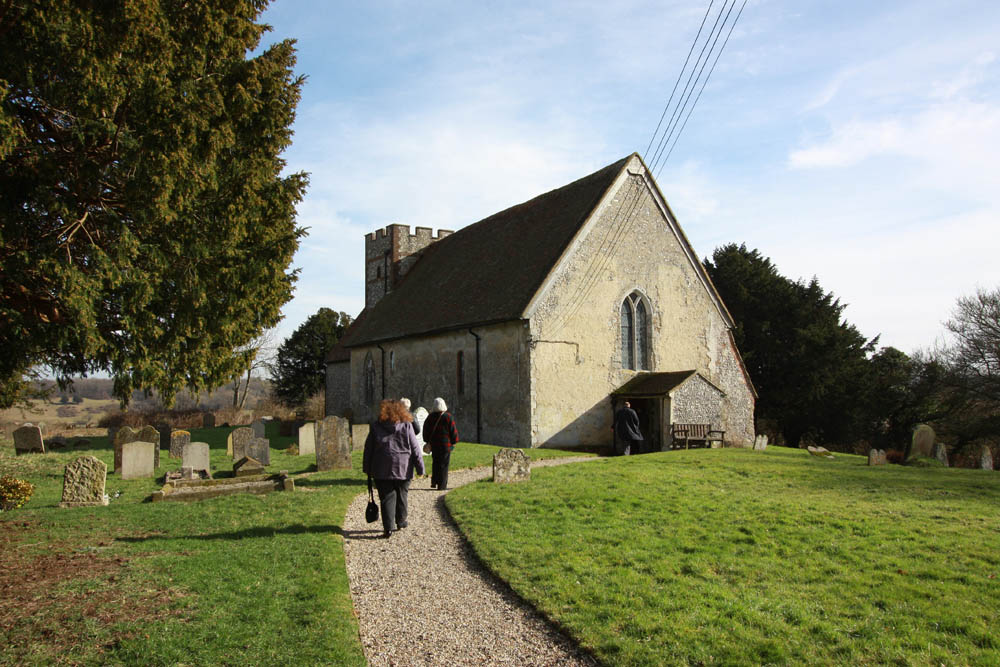
William was born in 1886 in St Peters, Isle of Thanet, Kent. His father was Joseph Thomas Barwick. The family were later based in Chatham. He married Winifred Fanny Harvey — the blacksmith's daughter from Waltham — on 27 November 1909 at St Bartholomew's Church, and the marriage was noticed in the local paper.
BARWICK–HARVEY. On the 27th November, at St. Bartholomew's Church, Waltham, by the Rev. F.W. Sidebotham, William Leonard Barwick, of Chatham, to Winifred Fanny Harvey.Faversham Times and Mercury · 11 December 1909
From Kent they moved to north London where William rose to Grocery Warehouse Manager at the London Co-operative Society by 1921. He had three children: Leonard George (1911), Winifred Sybil (1914) and Victor John (1920).
William served in the First World War in the Royal Army Service Corps Motor Transport. He came home. Many didn't. He died on 10 July 1923 in Edmonton, aged 36 or 37. Victor, the youngest child, was three years old.
Winifred Fanny kept the household in Wood Green for thirty-seven more years, raising three children alone. She died on 18 April 1960, aged 77. The blacksmith's daughter from Waltham, Kent, who married in a village church in 1909, died having seen more of the twentieth century than she could ever have imagined standing at that altar.
The Drummond Line
The Drummond family spent over 130 years within half a mile of Drury Lane.
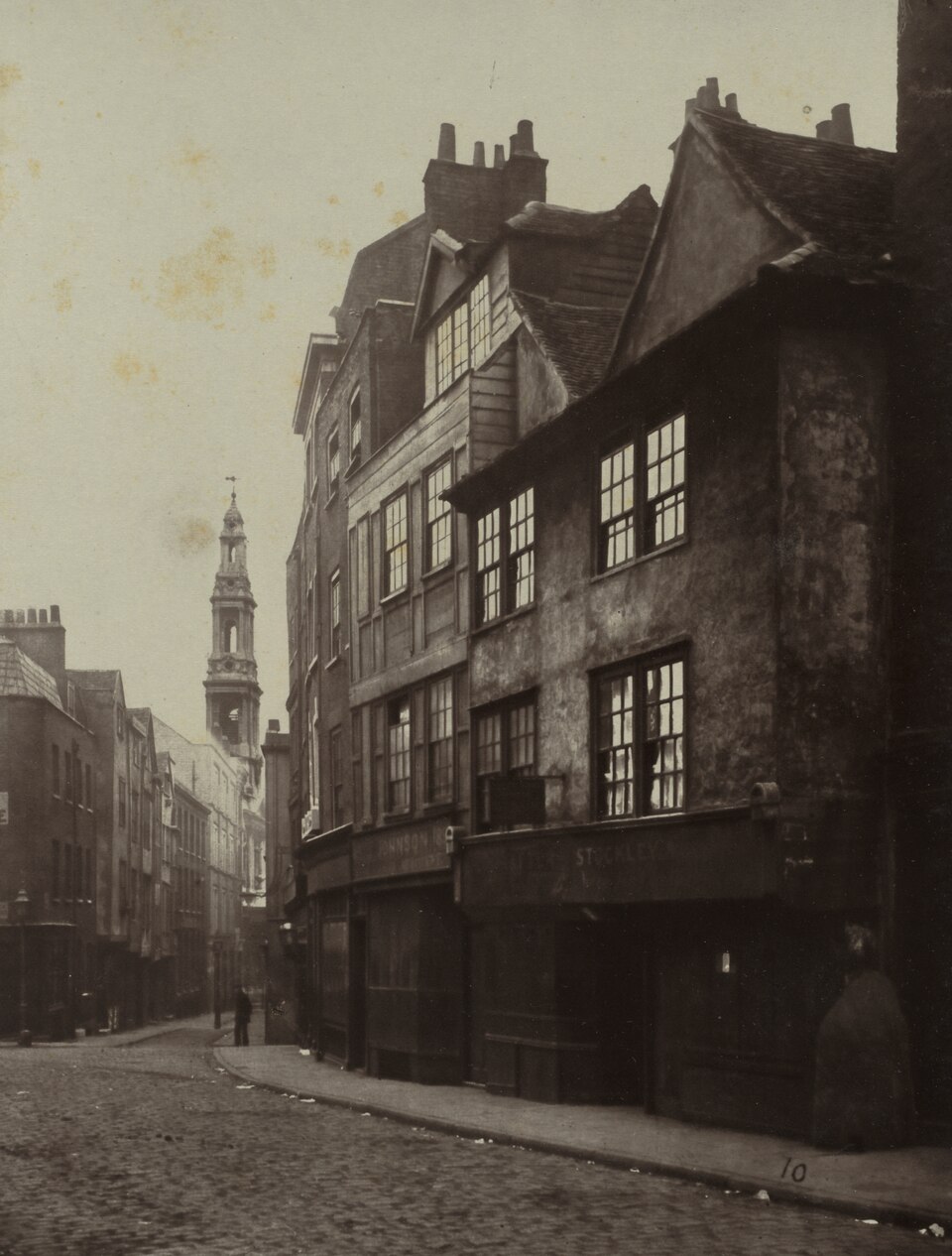
The Drummond line represents four generations of Londoners anchored to the Drury Lane district. William Frederick Drummond (1796 Holborn – 1846 Strand) married Hephzibah Dalton at St Anne's, Westminster on 7 March 1824. They had at least four sons: William John, Thomas, Frederick James and Napoleon Drummond.
Their son William John Drummond (1826 Bloomsbury St George – 1893 London) continued the family's central London presence. The next generation produced William Turnour Drummond (1856 Southwark – 1935 Shoreditch), who married Isabella Ann East (30 November 1855, St Giles – January 1890, St Giles). Notably, Isabella spent her entire recorded life in the same parish where she was born.
William Turnour Drummond's son, William Turnour D Drummond (1876 Strand – 1929 Islington), married Emily Eliza "Emma" Murray (3 November 1876 – 1912, died aged 35). Emma died young, leaving William with several children including Frederick, born in 1910 when Emma was 33.
Frederick Drummond (28 September 1910, Holborn – 1985, Enfield) broke the pattern by relocating north to Edmonton and Wood Green. His daughter Janet (b. 1957, Middlesex) continued the outward migration, marrying Brian Longden and settling in Hampshire by 1990.
The family's persistence in central London — within a half-mile of Drury Lane across 130 years — reflects a working-class rootedness that only fractured when Frederick moved out of the West End in the early twentieth century.
★Napoleon Drummond
Napoleon Drummond is perhaps the most extraordinary figure in the entire tree — and one whose story only emerged from deep newspaper research. His name alone stops you short.
Born into the rookeries
Napoleon was born in 1831 in St Giles, Middlesex. His mother was Keziah Drummond, a widow and charwoman scrubbing other people's floors to survive, living as a lodger in St Martin in the Fields. He was 20, she was about 50. The name Napoleon — given to a child born just ten years after the Emperor's death — suggests a household with opinions about the world, however little money they had.
The Crimean panorama man (1855)
A very admirable panorama of the Seat of War in the East, embracing every object of interest, from the departure of the household troops for the Crimea, to the stirring scenes that have been enacted throughout the war, will be exhibited during five days of next week, at the Lecture Hall, Nelson Street, under the direction of Messrs. Napoleon Drummond and A. Anderson.Kentish Independent · 28 April 1855
He was 24 years old, co-directing a touring spectacular about the Crimean War while the war was still being fought. Victorian panoramas were enormous painted canvases displayed in darkened halls with dramatic lighting and live narration. This was showmanship, entrepreneurship, and stagecraft all at once.
The Globe Theatre machinist (1871)
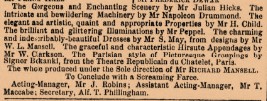
The Gorgeous and Enchanting Scenery by Mr Julian Hicks. The Intricate and bewildering Machinery by Mr Napoleon Drummond. The elegant and artistic, quaint and appropriate Properties by Mr H. Child. The brilliant and glittering Illuminations by Mr Peppel.The Era · 9 April 1871
Death at 41 — a mystery
In 1872, just over a year after his Globe Theatre credit, Napoleon Drummond died in Uxbridge, Middlesex, aged about 41. He was buried at St George, Hanover Square. Why he died in Uxbridge is unknown. His son William Turnour was 16 years old. The cause of death remains unrecovered — a final mystery for a man who spent his life creating illusions for other people.
The shadow he cast
Napoleon's early death left his teenage son William Turnour to fend for himself in the Strand. William became a printer's assistant. His son William Turnour D became a tinsmith. And William Turnour D's son Frederick ended up in the Holborn Union Poor Law Schools at Mitcham, motherless at two, before becoming a cobbler in Wood Green. In three generations, the family fell from a named West End theatre professional to a child in a Poor Law institution. That is not a story of failure — it is a story of what Victorian London did to families when the man at the top of the chain died young.
The Longden Line
The Longden family came from Birmingham — engine fitters and tool setters from the industrial Midlands — before one member ended up at the furthest edge of the British Empire and came home with a son born at the top of the Khyber Pass.
★James Kenneth Longden
Of all the biographical details in this tree, this is perhaps the most startling. James Kenneth Longden — Shelley's paternal grandfather — was not born in Coventry, or Birmingham, or anywhere in England at all.
His birth certificate reads: Landi Kotal, India.
The fort at the top of the pass
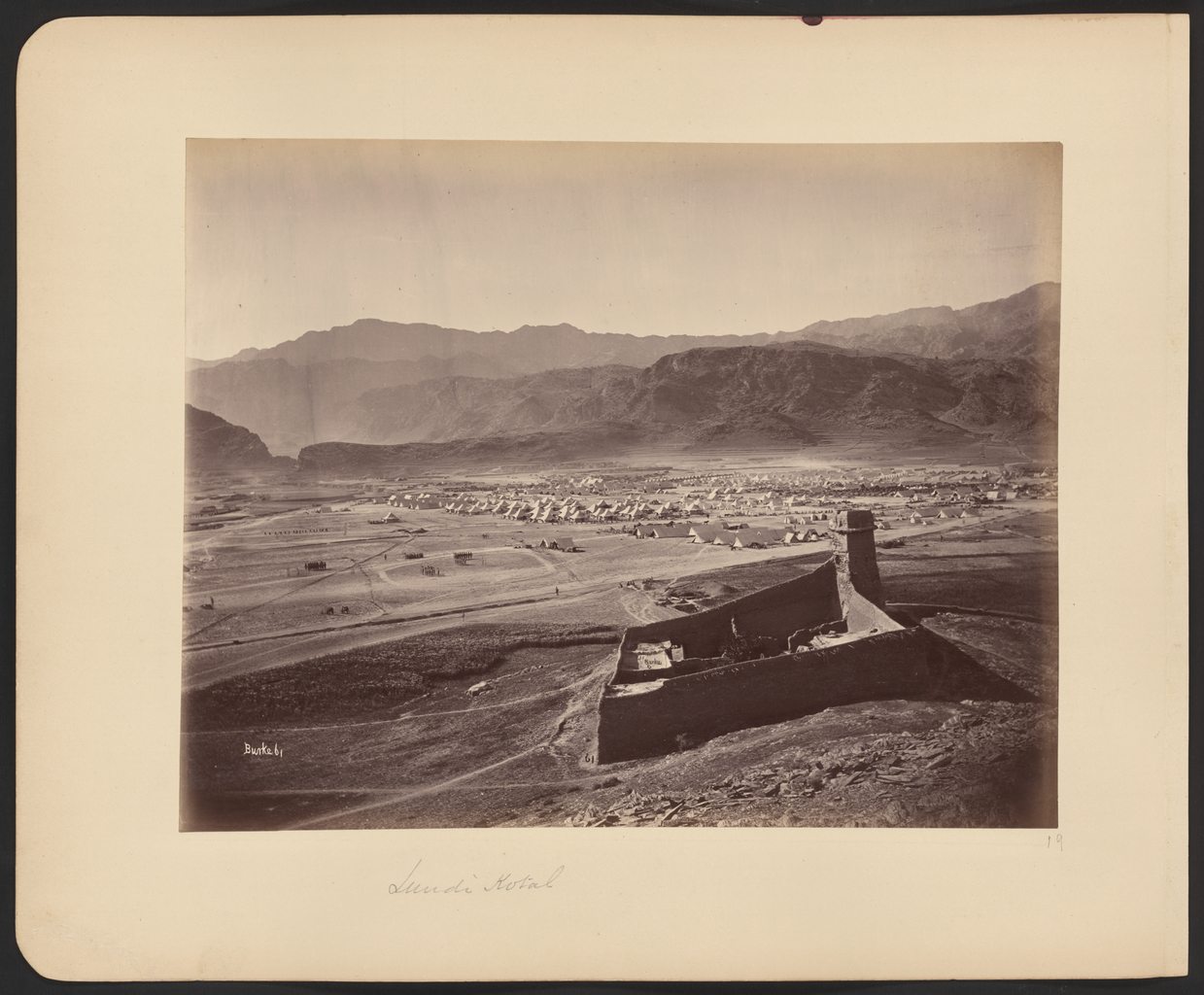
Landi Kotal is a British Army fort at the very summit of the Khyber Pass — the mountain corridor between what is now Pakistan and Afghanistan. In 1921 it was the highest fortification in British India. The Third Anglo-Afghan War had ended just two years earlier. The pass was still active, still dangerous, still being patrolled.
His father — almost certainly James Longden senior, born 1897 in Aston, Birmingham, son of Henry Longden (an engine fitter from Derby) — was a regular soldier stationed there around 1920. His mother Lilian (born 4 January 1898) had followed her husband to India as an army wife — one of the thousands of women who accompanied garrison families to the furthest edges of the British Empire.
James Kenneth Longden was born at that fort on 26 January 1921, at an altitude of over 3,500 feet, on the edge of one of the most contested pieces of territory on earth.
Coming home to Coventry
The family settled in Coventry. By 1939 James Kenneth was living at 8 Court 5 House, Bond Street — the same court-housing style as the Tedd family on Cox Street just streets away. His occupation: Capstan Operator.
Wartime marriage (1941)
James Kenneth married Florence May Tedd — Tom Tedd's youngest daughter — in Coventry in 1941. The Coventry Blitz had devastated the city centre on 14 November 1940, killing over 500 people and destroying the medieval cathedral. They married in a city still clearing rubble.
The grandfather nobody knew was extraordinary
James Kenneth Longden lived an entirely ordinary Coventry life — factory work, court housing, wartime service, a second marriage in 1978. Nothing about the man as Shelley's family knew him would have suggested that his birth certificate placed him at one of the most remote military outposts in the British Empire. That is precisely what makes it worth knowing.
The Tedd Line
The Tedd family was rooted in Coventry's industrial working-class landscape. William Tedd (5 January 1860, Coventry – 5 April 1899, Coventry) married Hannah Selina Cooke (19 November 1859, Coventry – 25 June 1940, Coventry), who outlived him by 41 years.
Their son Tom Tedd (b. 1892, Coventry) worked as a "Capstan Lathe Hand Setter Up" — a skilled metalworker who configured production lathes for Coventry's bicycle, motorcycle and motor-car factories. Tom married Florence Minett Barker (b. 1892, Coventry), daughter of the stonemason James Henry Barker and Emma Burbridge Nevill.
The 1921 census recorded the household at 2 Court 2 House, Cox Street, Coventry — a "court" being the typical industrial-era Coventry courtyard cottage. The family included William (b. 1912), Doris (1917), James (1919), and Florence May (1921), who became Shelley's grandmother.
Florence May Tedd (31 May 1921, Coventry – July 1973, Nuneaton) died aged 52, only seven years before her son Brian married Janet Drummond. The Tedds embodied industrial Coventry — courtyard cottages, factories and skilled metalwork — until the post-WWII rebuilding flattened the streets where they had lived.
★Tom Tedd
Tom Tedd first appeared in the local Coventry press as a child performer, and last as a young father at his baby's inquest. The Coventry papers carried his name from age 10 to age 22.
The boy entertainer (1902–1904)
By age 10, Tom Tedd was a regular on the Coventry parish-hall entertainment circuit, performing alongside his older brother Harry Tedd. A performance notice from the Coventry Evening Telegraph (31 December 1902) lists Tom among the singers at a local concert. In a Christmas farce reported in the Coventry Evening Telegraph (28 December 1903), Tom, aged 11, played the urchin Mike Dolan in Coventry and District. His older brother Harry played the policeman.
For an hour it was one roar of laughter.Coventry Evening Telegraph · 28 December 1903
The amateur boxer (1914)
Twelve years later, Tom Tedd had moved into the boxing ring. The Coventry Evening Telegraph (9 April 1914) covered an amateur bout:
The contest between Frank and Tom Tedds (Coventry) was a spirited affair … Tedd was frequently forcing.Coventry Evening Telegraph · 9 April 1914
He competed with enough power to trouble more skilled opponents.
The 1913 inquest — the baby Tom Tedd
In March 1913, Tom Tedd faced tragic circumstances. He and his wife Florence (née Barker) had a three-week-old son, also named Tom, who died.
On Monday afternoon, Dr. C. W. Iliffe conducted an inquiry at the City Sessional Court touching the death of a three-weeks-old child named Tom Tedd, son of Tom and Florence Tedd, of 2c. 2h., Cox Street.Kenilworth Advertiser · 8 March 1913
The address matched the 1921 census record exactly. The inquest concerned "overlaying" — infants suffocating in shared adult beds — a common Edwardian working-class tragedy. The 1921 census family did not list this baby because he had died; he was the family's second child. Tom was approximately 21 years old when he buried his son. About a year later, in April 1914, he stepped into a Coventry boxing ring as a grieving young man raising a household of children through the First World War.
What he did for a living
By 1921, when Tom was 29 and head of the Cox Street household with five children, the census recorded his occupation as "Capstan Lathe Hand Setter Up" — a skilled metalworker who set up production lathes for Coventry's factories. The Tedds were industrial Coventry personified.
★James Henry Barker
Occupation: stonemason / mason. Lived in court housing — 12 Court, Far Gosford Street (1900) and 3 Court 2 House, Grove Street (1901). Father of Emma Burbridge Nevill's children, including Florence Tedd née Barker (Shelley's great-grandmother). Died aged 52 at London Road, Coventry.
Imprisoned for assaulting his daughter
James Henry Barker, 12 court, house, Far Gosford Street, did not come up when his name was called, he being summoned by his daughter, Beatrice E. Barker, for assaulting her.Coventry Evening Telegraph · 14 July 1900
James Henry Barker, 12c., Far Gosford Street, was charged with failing to appear to a summons for assaulting his daughter, aged seventeen …Coventry Reporter · 4 August 1900
James Henry Barker, mason, 12c. Far Gosford St., was charged with failing to appear to summons for assaulting his daughter … He was committed to prison for fourteen days.Coventry Evening Telegraph · 28 July 1900
Drink and threats, October 1901
James Henry Barker, a stonemason, living at court, 2 house, Grove Street, was summoned by Clara Davis, a neighbour, for threats …Coventry Evening Telegraph · 24 October 1901
James Henry Barker, stonemason, 3c. 2h., Grove Street, was charged with being drunk and disorderly … The Constable said he found the man in Payne's Lane …Coventry Herald · 25 October 1901
The death notice (1911)
Barker. — James Henry Barker, London Road, aged 52 years.Coventry Reporter · 21 January 1911
James Henry Barker represents the closest approximation to a villain in this family tree. Court records paint a portrait of an individual struggling with alcohol, prone to violent outbursts, and willing to assault his own teenage daughter — with at least three magistrate appearances within sixteen months. The court housing environment where he resided — narrow blind-back two-up-two-downs accessed through covered entries, packed eight to ten houses per court — was among Coventry's most deprived working-class accommodation and notorious for rough conditions. His daughter Beatrice was an older sibling of Florence Barker.
Hannah Selina Tedd
Hannah Selina Cooke married William Tedd at Holy Trinity, Coventry on 26 February 1882. She was 22. He was a Watch Finisher. Her father Josiah Cooke was a brewer. She could not have known she would spend more than half her life as a widow.
Nine children and a husband dead at 39
Hannah and William had at least nine children between 1880 and 1897. William died on 5 April 1899, aged 39, when Tom was seven and Rose barely two. Hannah was left at 39 with up to nine children in court housing in Coventry, in a city whose watch-making industry was collapsing and being replaced by bicycles and motor cars.
The assault in Smithford Street (1871)
Hannah Tedd, a young woman, summoned a youth named John Cribdon for assaulting her in Smithford-street on Tuesday evening.Coventry Herald · 29 December 1871
Hannah Selina Cooke would have been about 12 years old — a girl confident enough to take the matter before the magistrates.
June 1940
Hannah Selina Tedd died on 25 June 1940 at 37 Middlecotes, Coventry, aged 81. Buried at London Road Cemetery — the same cemetery as her husband William, buried there 41 years earlier. She had outlived him longer than she had known him.
She died six weeks after Dunkirk. Five months later the Luftwaffe would flatten the city centre — Holy Trinity church where she had married, the courts where she had raised her children. She missed it by months.
Earlier Ancestors
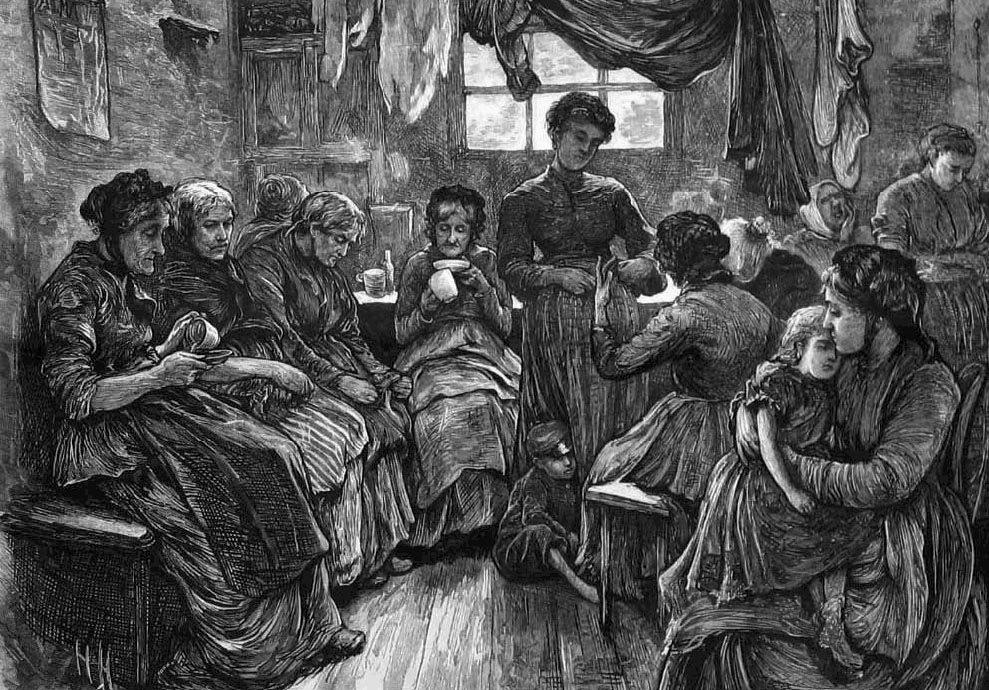
Hephzibah Dalton Drummond branch
Drury Lane Nonconformist London
Hephzibah Dalton · 2 February 1798, Middlesex – 26 March 1874, 70 Drury Lane
Among the most distinctive names in the tree. Hephzibah is a Hebrew Bible name (2 Kings 21:1; Isaiah 62:4) meaning "my delight is in her" — a marker of a Nonconformist Protestant household, typically Baptist, Methodist or Independent chapel. Her parents Joseph Dalton (the householder mentioned below) and Mary Ann Haines adhered to the same naming convention.
Hephzibah underwent baptism at age 1½ (29 September 1799) — a delayed Anglican baptism characteristic of Dissenter-leaning families who used the parish church reluctantly. She married William Frederick Drummond at St Anne's, Westminster on 7 March 1824. They produced at least four sons: William John, Thomas, Frederick James and Napoleon Drummond — the final choice reflecting the Bonaparte era.
Her census appearances are striking — enumerators struggled with her name's spelling. She appears as "Heyzinah Drummond" in 1841 and "Kesrah Drummond" in 1851, before settling as "Hepzibah" in 1861. She spent nearly her complete adult life within St Giles in the Fields, St Martin in the Fields, and Drury Lane. She died at 70 Drury Lane aged 76, and lies buried at West Brompton Cemetery.
Mary Ann Haines Drummond branch
death in the workhouse
Per parish records, 2 April 1842:
Mary Ann Haines (Hephzibah's mother), born about 1766 in St Martins, married Joseph Dalton — and died aged about 76 in the Castle Street workhouse, St Martin in the Fields, on 2 April 1842.Parish records · 2 April 1842
This is a sobering reminder that for many working Londoners through the early Victorian period, the parish workhouse was the final destination if they exhausted their resources and lacked family support. Mary Ann had been widowed seven years prior when Joseph died in 1835. The Castle Street workhouse occupied ground almost exactly where the present-day National Portrait Gallery stands — mere yards from where she had been born and lived.
John William Murray Drummond branch
the Irish crossing
John William Murray · 6 March 1797, Cork (or Roscommon), Ireland – May 1841, Middle Row Place, City of London
Born in 1797 — the year after the Bantry Bay landing of the French fleet — and made it across to London by his early twenties. The decisive evidence: he married Dinah Mayhew at Christ Church Greyfriars Newgate, London on 5 August 1821. Their first son, John William Murray Jr, was born just six months later on 12 February 1822 in Holborn — so Dinah was four months pregnant at the wedding. He died aged 44 in May 1841 at Middle Row Place, City of London. Dinah survived him by five years, dying in May 1846.
The tree also lists a possible earlier Irish partner, Honora Henessy (1794–1864, Cork), who may have been mother of the two oldest children, Bridget (1816) and Edward (1819).
The Bonsey brickmakers Drummond branch
Notice in the London papers, 1 November 1871 (The Morning Post · Daily News · The Daily Telegraph):
A list of partnerships and trades, including: Bonsey, Charlotte Bonsey, A. Bonsey — Chertsey, Surrey, brickmakers.London press · 1 November 1871
Charlotte Eliza Bonsey (1814–1871, our 3xG-grandmother) died at 16 Vere Street in the Strand on 23 November 1871 — three weeks after the London papers carried this notice mentioning a Bonsey brickmaking firm at Chertsey, Surrey. The Bonseys were therefore Surrey brickmakers — the kind of family running a local clay-pit and tile works on the Thames flood plain — with at least one daughter (Charlotte) who married out and moved to the Strand.
The "five Williams" of Drury Lane Drummond branch
Four straight generations of Drummond men called William something — all living within a half-mile of Drury Lane:
- William Frederick Drummond (1796 Holborn – 1846 Strand)
- William John Drummond (1826 Bloomsbury St George – 1893 London)
- William Turnour Drummond (1856 Southwark – 1935 Shoreditch)
- William Turnour D Drummond (1876 Strand – 1929 Islington)
- and a further William John Drummond (1898 Drury Lane – 1986 Romsey, Hampshire) breaks out
The chain finally broke when Frederick Drummond (1910–1985), Shelley's grandfather, was named Frederick rather than William and moved out to Edmonton.
★The Dalton Burglary of 1802
When Hephzibah Dalton was four years old, her father Joseph Dalton came home to find a stranger had broken into the house and was being chased into the dock at the Old Bailey. The trial papers survive in full.
Robert Wilson — Theft from a specified place
Old Bailey Proceedings · t18021027-125 · 27 October 1802 · First Middlesex Jury, before Mr. Baron Thompson:
Robert Wilson was indicted for feloniously stealing, on the 5th of October, in the dwelling-house of Joseph Dalton, two coats, value 15s. a pair of breeches, value 12s. a waistcoat, value 3s. one pound eighteen shillings in monies numbered, and two Bank-notes, value 2l. the property of Robert Wilson. The prosecutor not being able to identify the property, the prisoner was ACQUITTED.Old Bailey Proceedings · 27 October 1802
The defendant — Robert Wilson — shared a name with the prosecutor whose belongings he was alleged to have stolen. Either way, the basic facts are clear: in October 1802, Joseph Dalton's London dwelling-house experienced a break-in, and a man's wardrobe, cash and bank notes went missing.
This is documentary proof that, by 1802, Joseph Dalton (Hephzibah's father, and Shelley's 5x great-grandfather) had sufficient means that a fellow lodger or visitor kept his entire wardrobe and savings within the household. The acquittal hinged on a technicality — the prosecutor could not identify his own garments — but the burglary itself was undisputed.
The Big Stories
1 · The Irish crossing of John William Murray (1819–1821)
Murray was born in 1797 in Cork or Roscommon and crossed to London between 1819 and 1821. He married Dinah Mayhew at Christ Church Greyfriars Newgate in August 1821 while she was four months pregnant. He died aged 44 in 1841 at Middle Row Place, City of London. The migration likely resulted from post-Napoleonic agricultural collapse in Ireland after 1815 and London's expanding labour market.
2 · The Drury Lane Drummonds (1796–1929)
For 130 years, successive Drummond generations were born within a half-mile of Drury Lane. Frederick (1910–1985) was the first to break this pattern by relocating to Wood Green and Edmonton. His daughter Janet extended the migration further, eventually settling in Hampshire.
3 · The Coventry industrial family (1860–1973)
Five generations of Tedds, Cookes, Barkers and Nevills lived within Coventry, working in inner-city courts and yards along Cox Street, Far Gosford Street, and Grove Street. Tom Tedd worked as a Capstan Lathe Hand Setter Up — a position that effectively disappeared with British engineering decline by 1980. The Barkers were stonemasons. Brian Longden became the first to leave the West Midlands, moving south to Hampshire.
4 · The dark corner
James Henry Barker (1860–1911), Coventry stonemason, was imprisoned for two weeks in summer 1900 for assaulting his 17-year-old daughter Beatrice. Within fifteen months, magistrates charged him again for drunkenness and threatening a neighbour. He was Florence May Tedd's maternal grandfather and Shelley's great-great-grandfather.
5 · Names that carry forward
- James / Kenneth — James K Longden → Brian Kenneth Longden
- Florence — Florence Sr Tedd (Barker) → Florence May Tedd
- Winifred — Winifred Fanny Harvey → Winifred S Barwick
- Tom — Tom Tedd Sr → baby Tom Tedd (died 3 weeks old, 1913)
- William John — used three times across the Drummond line
Index — Everyone in the Direct Line
Generation 0
Shelley Annette Longden (b. 1990)
Generation 1 — parents (2)
Brian Kenneth Longden · Janet Susan Drummond
Generation 2 — grandparents (4)
James Kenneth Longden · Florence May Tedd · Frederick Drummond · Winifred S Barwick
Generation 3 — great-grandparents (6 known of 8)
Tom Tedd · Florence Tedd (Barker) · William Turnour D Drummond · Emily Eliza Murray · William Leonard Barwick · Winifred Fanny Harvey
Generation 4 — great-great-grandparents (8)
William Tedd · Hannah Selina Cooke · James Henry Barker · Emma Burbridge Nevill · William Turnour Drummond · Isabella Ann East · George Murray · Sarah Cooper
Generation 5 — 3xG-grandparents (8 known)
William John Drummond · Elizabeth Mary Titchener · John East · Charlotte Eliza Bonsey · John William Murray Jr · Elizabeth Ann Cooper · James Cooper · Eleanor Poston
Generation 6 — 4xG-grandparents
William Frederick Drummond · Hephzibah Dalton · John William Murray Sr (Cork) · Dinah Mayhew · Honora Henessy (Cork) · Robert Samuel Bonsey · Lydia Hulse · William East · Ann · James Hensley · Elizabeth
Generation 7 — 5xG-grandparents
John Drummond · Cathe Drummond · Joseph Dalton · Mary Ann Haines (d. workhouse) · William Henessy · Julia Ann Ryan (both Cork)
Sources & Methodology
Ancestry and genealogical records
All birth, marriage, death and census data derived from the Longden Family Tree on Ancestry.co.uk (tree #210484516, exported as a GEDCOM file containing 70 individuals across 28 family units).
Newspaper sources
Tom Tedd material: Searched via FindMyPast's British Newspaper Archive (102 million pages). Primary sources include Coventry Evening Telegraph (1902, 1903, 1914, 1920); Kenilworth Advertiser (1913); Coleshill Chronicle (1913); Coventry Reporter (1903, 1904).
James Henry Barker material: Coventry Evening Telegraph (1900, 1901); Coventry Reporter (1900); Coventry Herald (1901); Coventry Reporter (1911 death notice).
Bonsey brickmakers: Newspapers.com search of The Morning Post, Daily News, and The Daily Telegraph, all dated 1 November 1871.
Dalton burglary: The Proceedings of the Old Bailey, free public archive (Digital Humanities Institute, University of Sheffield), trial reference t18021027-125, dated 27 October 1802.
Historical and reference context
- "Hephzibah" name etymology: 2 Kings 21:1 and Isaiah 62:4 in the Hebrew Bible.
- Year Without a Summer (1816) caused by Mount Tambora eruption (1815), contributing to Irish post-Napoleonic agricultural collapse.
- Coventry "court" housing: Edwardian working-class courtyard housing, mostly demolished post-WWII.
- "Children and Cots" inquests: period euphemism for infant overlaying / cot-death inquests, common in Edwardian working-class homes.
Additional sources for new sections
- Napoleon Drummond — Kentish Independent, 28 April 1855; The Era, 9 April 1871 — both via FindMyPast British Newspaper Archive.
- Frederick Drummond — 1921 Census GBC/1921/RG15/03591/0009/15 via FindMyPast; 1939 Register TNA/R39/0991/0991G/005/04 via FindMyPast.
- William Leonard Barwick — 1921 Census GBC/1921/RG15/06757/0591/01 via FindMyPast; Faversham Times 11 December 1909 via FindMyPast.
- James Kenneth Longden — GRO Army Birth Index BARM series, Landi Kotal India 1921, via FindMyPast.
- Hannah Selina Tedd — Coventry Herald 29 December 1871 via FindMyPast.
Image credits
Location photographs — all Wikimedia Commons, public domain or Creative Commons. Drury Lane 1876: Alfred H. Bool, Cleveland Museum of Art, CC0. Landi Kotal 1878–1880: John Burke, Library of Congress, public domain. St Giles 1872: Hubert von Herkomer, The Graphic, public domain. St Bartholomew's Waltham: geograph.org.uk CC BY-SA 2.0. Mitcham London Road: public domain postcard c.1900–1910s. Wood Green 1909: public domain postcard.
Family photographs: private collection, reproduced with permission. Colourisation via Gemini AI — colours are interpretive.
Family Tree
A visual family tree linking every person named on this page is in preparation.